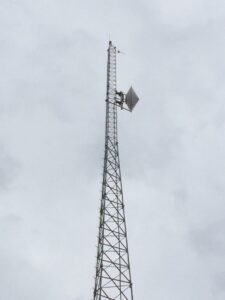

Prepared for Economic and Technology Development Stakeholders by John Hargrove PE October 2025
Executive Summary
Artificial intelligence is reshaping the global economy and driving a massive surge in computing demand. Most attention focuses on billion-dollar hyperscale data centers that consume hundreds of megawatts of power. Yet an equally important opportunity exists at the edge of the network—smaller, regionally distributed facilities in the 3- to 5-megawatt range. Rural East Texas is uniquely positioned to host these centers. This paper outlines why building a network of community-anchored edge AI data centers offers a more resilient, affordable, and inclusive strategy than relying solely on massive hyperscale complexes concentrated in urban zones.
1. The Emerging Edge of AI
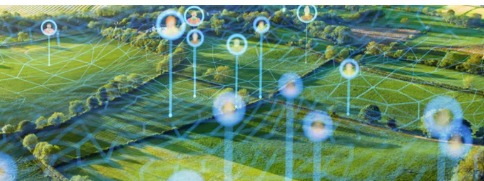
The next generation of AI systems depends on computing that is close to the point of use. Training enormous models requires large centralized sites, but everyday AI—autonomous vehicles, manufacturing control, agricultural automation, real-time analytics, and public safety applications—requires low-latency local processing. Edge AI centers deliver that capability. They connect industrial plants, utilities, schools, and local governments into the digital economy while improving data security and response times.

Texas has become a global leader in hyperscale investment, but it lacks a distributed layer of infrastructure that can serve the thousands of smaller communities and industries outside major metros. Rural East Texas can fill that gap.
2. Why Rural East Texas
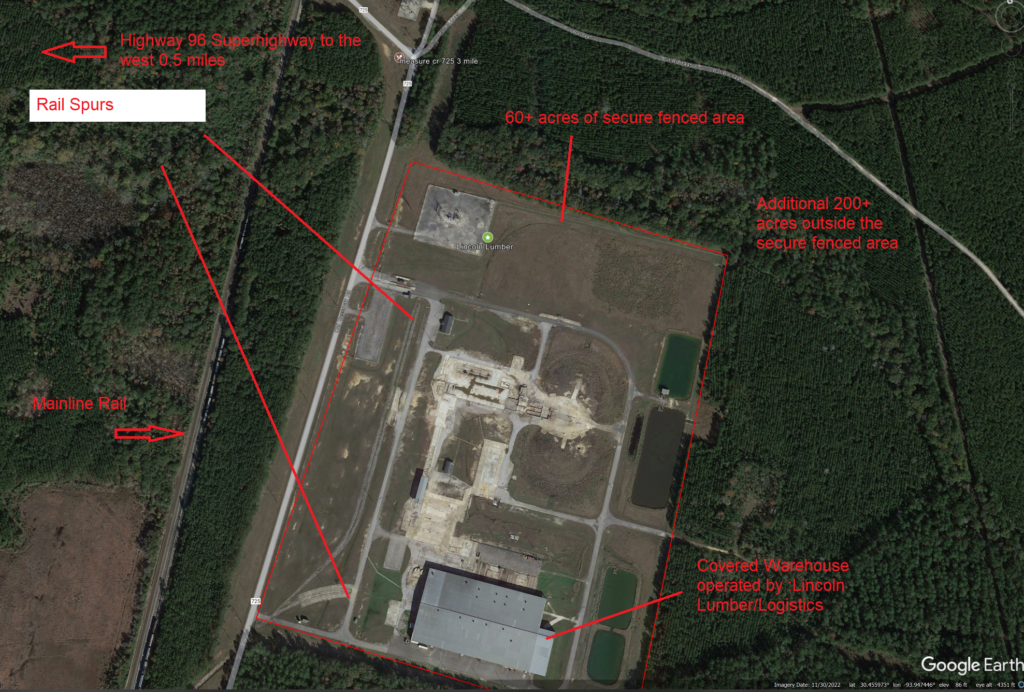
East Texas possesses the essential ingredients for a new generation of smaller AI data centers. Jasper-Newton Electric Cooperative and neighboring co-ops already maintain transmission and distribution capacity capable of supporting multiple 3-megawatt loads. Industrial parcels near Buna, Jasper, and Pineland are high, dry, and inexpensive. They are served by both 14-kV and 138-kV lines, making interconnection affordable and reliable.

The region’s geography offers an ideal balance—close enough to Houston, Beaumont-Port Arthur, and Shreveport for sub-10-millisecond latency, yet far enough inland to provide storm-resilient redundancy for coastal industries. Local economic organizations such as Buna Regional Economic Development LLC (REDI) and the Buna Chamber of Commerce are already studying broadband, emergency services, and infrastructure improvements.
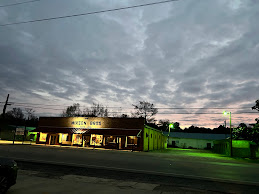
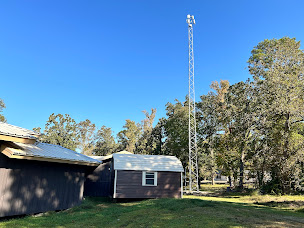
A 3-megawatt facility would generate roughly 20 to 30 permanent skilled jobs and dozens more in construction and contracting. Partnerships with various state colleges and local ISDs can train technicians locally, ensuring that the economic benefit remains within the community.
3. Advantages Over Hyperscale Development
Large hyperscale campuses require hundreds of acres, enormous water supplies, and complex grid upgrades. They concentrate risk, strain local power systems, and primarily benefit distant corporate owners. By contrast, rural edge centers cost about four million dollars each, draw only a few megawatts, and can be financed by local cooperatives, community development entities, or regional investors.
The distributed model strengthens resilience. If one site fails, others continue operating. It reduces transmission losses, balances grid demand, and supports renewable integration through solar or battery microgrids. These facilities also minimize environmental impact and can use air-cooled or hybrid cooling without the heavy water draw of larger plants.
Most importantly, they democratize access to the AI economy. Rather than funneling opportunity to a handful of cities, edge infrastructure allows small towns to participate directly in digital production and data services.
4. Financial and Policy Rationale
A rural 3-megawatt AI center in East Texas would cost roughly four million dollars to construct, including power systems, cooling, and baseline GPU capacity. With GPU leasing, industrial colocation, and data-service contracts, such a facility can achieve rapid return on investment while stabilizing the local grid as a flexible load for demand response programs.
Federal and state initiatives increasingly favor distributed resilience and rural innovation. Funding opportunities exist through the Economic Development Administration, the U.S. Department of Agriculture, and the T.L.L. Temple Foundation’s rural opportunity programs. Smaller, community-governed data centers also reduce cyber and physical risks by avoiding single points of failure.
5. Implementation Pathway
A practical first step is to establish a pilot three-megawatt AI edge campus in Jasper County through a partnership among REDI, the local electric cooperative, and private technology investors. The facility would integrate a microgrid, renewable backup, and training programs. Once operational, the model can be replicated across five East Texas counties, forming a connected network of rural AI nodes tied into state broadband and energy corridors.
6. Conclusion
Rural East Texas holds the right combination of land, power, workforce, and community vision to pioneer a distributed AI infrastructure model. Billion-dollar hyperscale projects will continue to play their role, but they cannot by themselves provide the resilience, equity, or regional development that the digital era demands. Mid-scale, locally owned data centers in the three-megawatt class can do so—linking rural America to the heart of the intelligent economy, creating high-skill jobs, and building a stronger, more balanced foundation for Texas and the nation.