
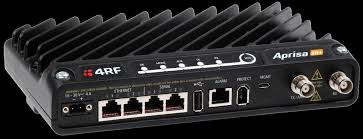
Your Aprisa radio is rated at 83 Kbps. Your OT traffic requirements are 40 Kbps. So you’re good, right? Case Study of what to look out for in designing narrow-band links.
Not necessarily.
In 2017-2018, three rural utility cooperatives learned a hard lesson: nominal capacity and usable capacity are not the same thing.
The Constraint
Aprisa radios running 64 QAM modulation can carry exactly 66 packets per second—regardless of size. This isn’t a throughput limit (bits per second). It’s a packet count limit, built into the radio’s 5 millisecond overhead per packet on the RF channel.
At first, this seemed irrelevant. Until field testing revealed the real traffic load:
- DNP3 polling at 2 Hz: 32 pps
- OSPF management: 11 pps
- Diagnostics and other protocols: 7 pps
- Total: 50 pps under normal load
The radios were operating at 75% of their hard limit—before any retransmission, firmware update, or network convergence event.
Why Nobody Saw It
The cramped condition was obvious once articulated. But during procurement? Not the vendor, not me the engineer, not the contract designers—nobody was asking “how many packets per second can this carry?”
We led with throughput numbers. We assumed bps capacity translates to usable capacity. In IT networks, it usually does. In narrow-band radio, it doesn’t.
This knowledge gap is industry-wide and was unrelated to the Aprisa Technical team.
What Changed
Deployments stabilized through design discipline: disable STP, tune OSPF timers, lock modulation strategy, and build a packet rate budget before going live.
The lesson? Question every system’s pps capacity alongside its throughput. For rural utilities planning network modernization, this isn’t optional—it’s foundational.
Narrow-band radio remains a valuable tool. But deploy it with eyes open to this constraint.
Want deeper technical guidance on packet rate budgets and design methodology? Ask for the full article (john@johnhagrovpe.com ) or reach out to discuss your network’s traffic profile. 1+409-994-2203.