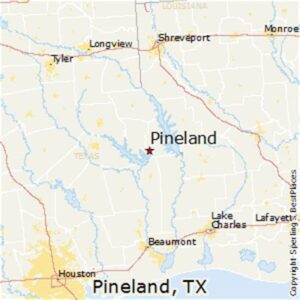

Recent announcements regarding large-scale artificial intelligence (AI) data center development in Angelina County have heightened interest across Deep East Texas in pursuing similar opportunities. This briefing paper provides a grounded, engineering-informed assessment for economic planners, county judges, councils of governments (COGs), and regional development organizations.
The core conclusion is simple: not all counties are positioned to compete for hyperscale data centers, and attempting to do so without acknowledging power-market realities exposes rural communities to financial and political risk. However, when constraints are clearly understood, substantial and appropriate opportunities still exist—particularly for right-sized, edge-oriented, and generation-aware development.
This paper focuses on the contrasting realities of Angelina County (ERCOT) and Jasper County (MISO) and outlines a fit-first strategy aligned with power availability, timelines, and costs.
1. The Power Market Divide: ERCOT vs. MISO
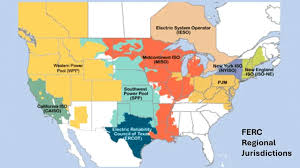
Angelina County benefits from its location within the ERCOT electric market. ERCOT offers structural advantages for large AI and data center developments, including:
- Lower marginal energy costs
- Faster access to large blocks of power
- Greater flexibility for on-site and hybrid generation
- Fewer capacity-market distortions
These advantages materially support gigawatt-scale or hyperscale AI campuses, such as the proposed development near Lufkin.
Jasper County, by contrast, is served through MISO. While MISO is a stable and well-regulated market, it presents significant challenges for large new loads:
- Capacity pricing, volatility and upward pressure
- Longer timelines for transmission and generation upgrades
- Higher interconnection and contribution-in-aid-of-construction (CIAC) costs
This distinction is decisive and must inform all regional development strategies.
2. Ground-Truth Assumptions for Jasper County
Based on current utility planning realities, any data, AI, or compute-intensive facility proposed in Jasper County must assume the following:
- Loads above ~5 MW will require on-site gas peaking or combined heat and power (CHP)
- Utility-sourced grid power timelines of 3–5 years for meaningful capacity additions
- Practical grid delivery limits of approximately 50–100 MW per project
- Utility interconnection and system upgrade costs in the range of $4–7 million, often required upfront
These are not theoretical constraints; they reflect current planning, permitting, and transmission realities.
3. What Jasper County Should Not Chase
Given these constraints, Jasper County should avoid:
- Hyperscale, single-tenant AI or cloud data centers
- Grid-dependent projects promising rapid access to >100 MW
- Speculative developments that assume transmission upgrades without firm commitments
Attempting to directly compete with ERCOT-based sites for large AI campuses introduces disproportionate financial risk, unrealistic timelines, and reputational exposure for local governments.
4. The Real Opportunity: Generation-Forward, Edge-First Development
Jasper County’s strength lies not in cheap power, but in reliable, self-supplied, and controllable power.
A viable and defensible development strategy includes:
- 5–50 MW class facilities, designed from inception with:
- On-site gas peaking or CHP
- Islandable microgrids
- Limited dependence on future transmission expansion
- AI edge and inference facilities, characterized by:
- Predictable and bounded loads
- Lower concurrency than hyperscale training centers
- Direct regional value creation
- Industrial and infrastructure-adjacent users that integrate compute, logistics, and energy rather than separating them
This approach aligns with Jasper County’s infrastructure reality and reduces exposure to grid uncertainty.
5. Implications for Buna and Similar Communities
For communities such as Buna, these constraints are not disadvantages—they are design parameters.
Fit-first opportunities include:
- 1–10 MW edge AI or industrial compute sites
- Rail-served or logistics-adjacent facilities with embedded generation
- Workforce-linked industrial tenants supporting regional infrastructure growth
By planning around constraints rather than denying them, rural communities can move faster, approve projects with confidence, and maintain local control.
6. Regional Planning Guidance for TFCP, COGs, and County Leadership
For regional planners and elected officials, the recommended posture is:
- Screen projects early for power realism
- Require clear statements on on-site generation above 5 MW
- Distinguish between ERCOT-advantaged and MISO-constrained counties in regional marketing
- Promote collaboration rather than competition between counties with different structural roles
Angelina County can serve as a hyperscale anchor. Jasper County and similar counties can serve as edge, resilience, and support nodes within a broader regional ecosystem.
7. Strategic Conclusion
The AI infrastructure wave is real, but it is not uniform. Power markets, grid timelines, and generation economics determine where assets fit.
- ERCOT counties win on scale and energy economics
- MISO counties win on reliability, self-generation, and right-sized development
- Rural success depends on truthful planning, not aspirational marketing
By aligning development strategy with engineering reality, Deep East Texas communities can attract durable investment, avoid costly missteps, and build infrastructure that serves both economic growth and public interest.