By John E. Hargrove, P.E. | Evergreen Technology Solutions LLC
If you run a small Public Housing Authority in East Texas — or sit on the board of one — you already know what the technology situation looks like. Somewhere on the property there’s a camera system that half works. The network is a flat, unmanaged mess that nobody has touched in years. The phone system is copper from sometime in the 1990s. The maintenance guy is also the de facto IT guy, except he was hired to fix plumbing and hasn’t touched a network switch in his life. And the Capital Fund budget was spent on roofing and HVAC before technology got a look.
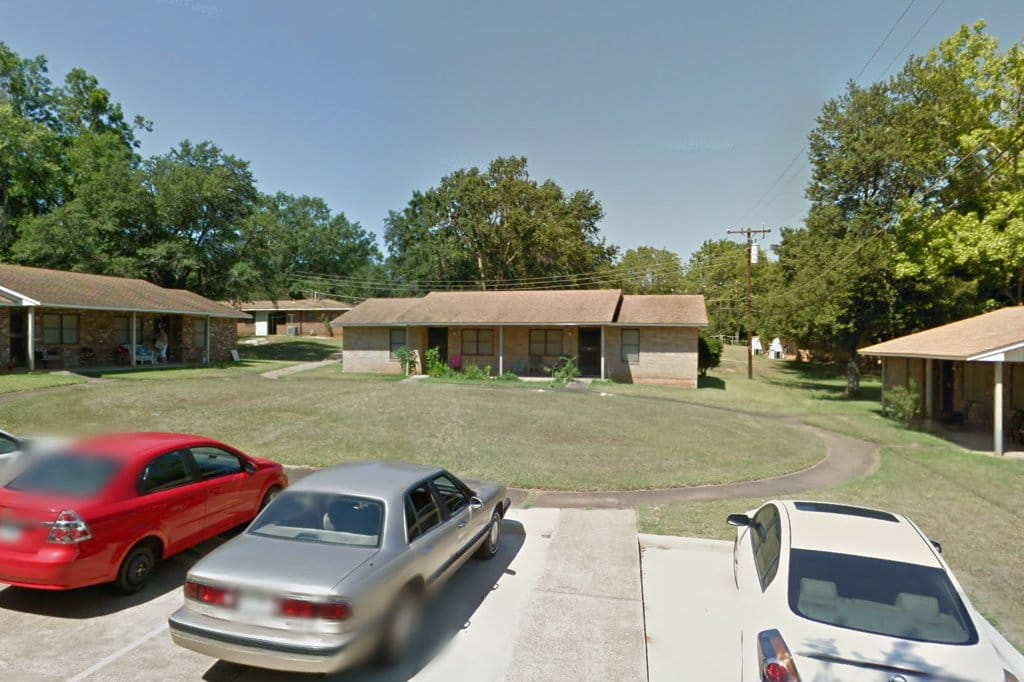
That’s not a criticism. It’s just the reality at most rural PHAs in the 60-to-300-unit range. Thin staff, old equipment, and a list of physical needs that never gets shorter. Technology stays at the bottom until something breaks completely and then it becomes an emergency at emergency prices.
What a lot of these agencies don’t know — and what I’ve put together a full planning guide to address — is that there’s more grant funding available right now for PHA technology improvements than at any point I can recall. Cameras. Networking. VoIP phone systems. Cybersecurity planning. Broadband infrastructure. The money exists. The challenge is knowing where to find it, how to frame a project so it actually qualifies, and how to piece together multiple programs to cover a scope that no single grant will fully fund.
Here’s the summary version.
The Problem With Deferred Technology
When a rural PHA defers technology needs year after year, the cost doesn’t go away — it compounds. A camera system installed ten years ago and never properly maintained ends up with dead cameras, a full NVR drive nobody has cleared, and coverage gaps in the exact areas where incidents happen. The contractor who installed it may be out of business. Nobody on staff knows how the system is configured. By the time something forces the issue, the PHA is paying emergency rates to a vendor who has to start from scratch.
The same pattern plays out with networks and phones. A flat, unsegmented network where the security cameras share the same subnet as the tenant management software is a real liability risk — not a theoretical one. One compromised IP camera can give an attacker access to tenant Social Security numbers and HUD-connected systems. Most small PHAs have never had anyone look at this.
The structural cause is understaffing. An Executive Director, a couple of maintenance techs, and an admin. No IT department. When technology fails it falls on whoever is available. The fix gets deferred, the problem grows, and nothing gets planned until it becomes a crisis.
What Technology Actually Does for a Small Agency
I want to be clear about something: technology doesn’t replace people. But it does change what a small staff can get done with the time they have.
A properly installed IP camera system gives management and law enforcement documented coverage of common areas, parking lots, and entry points around the clock — without a dedicated security officer on duty. A VoIP phone system lets a maintenance tech take and make work calls from his personal cell through the PHA’s number, with the call logged automatically. Cloud-based work order software replaces the paper maintenance log and generates the documentation trail HUD auditors ask for. A managed IT service contract puts a vendor on the hook for keeping the network running at a fixed monthly cost, instead of paying whoever picks up the phone when something breaks on a Sunday.
None of these require a major capital outlay if they’re planned and funded correctly. That’s what the rest of this comes down to.
The Money: Where It Is and How to Get It
HUD Capital Fund is the starting point for most PHAs. Every traditional public housing agency gets an annual formula allocation — typically $50,000 to $400,000 per year for agencies in the 60-to-300-unit range, though it varies. Security cameras, NVRs, network switches, office computers, and VoIP hardware are all eligible capital expenditures. The catch is that Capital Fund is usually already committed to roofing, HVAC, and plumbing. Technology sits below the line. That’s where the supplemental programs come in.
HUD’s Emergency Safety and Security Grant (ESSG) is the most useful program for camera remediation and expansion work. It’s a competitive grant, up to $250,000 per PHA per year, for documented safety and security emergencies at specific developments. The selection is by lottery with preference for small PHAs under 250 units. To qualify, you need documented incidents — police reports, crime statistics, a specific and current safety hazard. The project needs to be framed as addressing that emergency, not just routine modernization.
One situation I see often: a camera system was installed a few years ago, the contractor has since gone out of business, and it never worked correctly. To position that as ESSG-eligible, you frame it as an expansion of coverage into currently unprotected areas, with repair of the defective installation as the technical prerequisite for making that expansion work. You document the coverage gaps, document what’s happening in those unprotected areas, and address the contractor failure directly in the narrative. HUD will scrutinize the framing, so it matters.
Community Development Block Grants (CDBG) can fund cameras, fencing, lighting, and network infrastructure at public housing when the low-to-moderate income benefit test is met. Rural East Texas counties receive CDBG through TDHCA rather than directly from HUD. PHAs access these funds through their city or county government — not by applying directly to TDHCA. The Deep East Texas COG in Jasper is the right starting point for counties in that region.
Byrne Justice Assistance Grants (JAG) are the main federal formula grant for state and local criminal justice, and fixed surveillance systems are a documented eligible use. PHAs almost always come in as a sub-recipient through the city or county, not as a direct DOJ applicant. Coordination with the sheriff or local police is typically required. If you’re in Jasper County, Hardin County, Angelina County — call your county criminal justice coordinator and ask whether JAG funds are available and whether the PHA can be structured as a sub-recipient.
USDA programs matter for rural PHAs in two ways. ReConnect funds broadband infrastructure in areas without adequate internet service — which covers most of rural East Texas. ReConnect doesn’t pay for cameras directly, but it pays for the broadband backbone that makes IP cameras, cloud NVR storage, and VoIP actually reliable. PHAs engage ReConnect by ensuring their developments are included as service locations in an ISP’s application — contact the USDA Rural Development state office in Temple. The Community Facilities program provides grants and loans for essential facilities in communities under 20,000 people. VoIP systems, network equipment, and communications infrastructure are eligible. Grant amounts for technology projects typically fall in the $50,000-to-$500,000 range.
The Cybersecurity Piece Most PHAs Skip
Most small PHAs have flat, unmanaged networks where cameras, office computers, and HUD-connected systems all share the same segment. That’s a real problem that doesn’t require a sophisticated attacker to exploit. A lot of incidents start with a default password on an IP camera or an unpatched router firmware.
The good news is that CISA — the federal Cybersecurity and Infrastructure Security Agency — provides free services to state and local government entities. Free. No application. You call their Dallas regional office, you tell them you’re a public housing authority, and you ask for a regional advisor visit and a vulnerability scan. The commercial equivalent value of those services is well above what most small PHAs could afford to purchase. And the written findings you get back from a CISA assessment make your next grant application stronger.
For PHAs that want a framework for prioritizing cybersecurity investment, the Cyber-Informed Engineering methodology from Idaho National Laboratory is worth understanding. The core idea is simple: figure out which of your systems matter most, figure out what happens when they fail, and spend your security budget on protecting those specific things — not on a generic compliance checklist. Applied to a rural PHA, that means putting your tenant management software and HUD-connected systems on a separate network segment from your cameras and building controls. One compromised camera should not be able to reach your tenant data. That’s basic segmentation and it’s achievable at modest cost.
Technology Pays for Itself Over Time
The other argument that tends to land well with HUD and local boards is the cost reduction case. Technology is easy to frame as a cost center — equipment that needs money. But most of the investments described here reduce operating expenses in measurable ways.
VoIP telephone systems run 40 to 60 percent cheaper per month than equivalent legacy phone service. LED lighting upgrades reduce utility costs 15 to 40 percent and eliminate most lamp-replacement labor. A managed IT service contract replaces unpredictable emergency break-fix spending with a fixed monthly cost — and when you run the numbers on a typical year of after-hours callouts and vendor emergency rates, the managed service almost always wins. Camera systems reduce insurance premiums and help recover costs from vandalism and property damage that would otherwise go undocumented and unrecovered.
These aren’t hypothetical benefits. Build them into your grant narrative with real numbers and they become one of the stronger arguments in the application.
Where to Start
A few practical steps I’d recommend for any East Texas PHA ready to move on this:
Walk your properties and take inventory first. Document what cameras are functional, what areas have no coverage, how the network is configured, what the phone system is, and what your average monthly utility costs are. This becomes the factual basis of every grant narrative you write. It doesn’t need to be a formal engineering study — a spreadsheet and some photographs is enough to get started.
Write a simple 3-year technology plan. Two pages in Word. Year one covers the most urgent safety gaps. Year two addresses communications and cybersecurity. Year three handles energy efficiency and broadband. That document signals to HUD and grant reviewers that the PHA is managing its needs rather than reacting to whatever broke most recently.
Make some phone calls. HUD Fort Worth Field Office for Capital Fund consultation. Deep East Texas COG in Jasper for CDBG and JAG guidance. CISA’s Dallas regional office for the free advisory visit. USDA Rural Development in Temple for Community Facilities and ReConnect. TDEM for any HMGP opportunities tied to recent disaster declarations in your county.
Get an engineering partner involved before you file a competitive application. A licensed PE on the application provides credible project documentation, confirms that proposed equipment meets HUD’s NSPIRE standards, and writes a technical narrative that holds up under review. Some USDA and HUD programs require PE sign-off on project documents. This is not the place to wing it.
The full planning guide — covering all fourteen funding programs, a network segmentation framework, a grant stacking scenario, and a complete quick-reference table — is available through Evergreen Technology Solutions. If you’re an East Texas PHA working through any of these questions, reach out directly.
John E. Hargrove, P.E. is a licensed Professional Engineer in the State of Texas with over four decades of experience in telecommunications, critical infrastructure engineering, and OT cybersecurity. He operates through Evergreen Technology Solutions LLC and JohnHargroveConsulting LLC, serving rural East Texas electric cooperatives, water utilities, public agencies, and infrastructure clients.